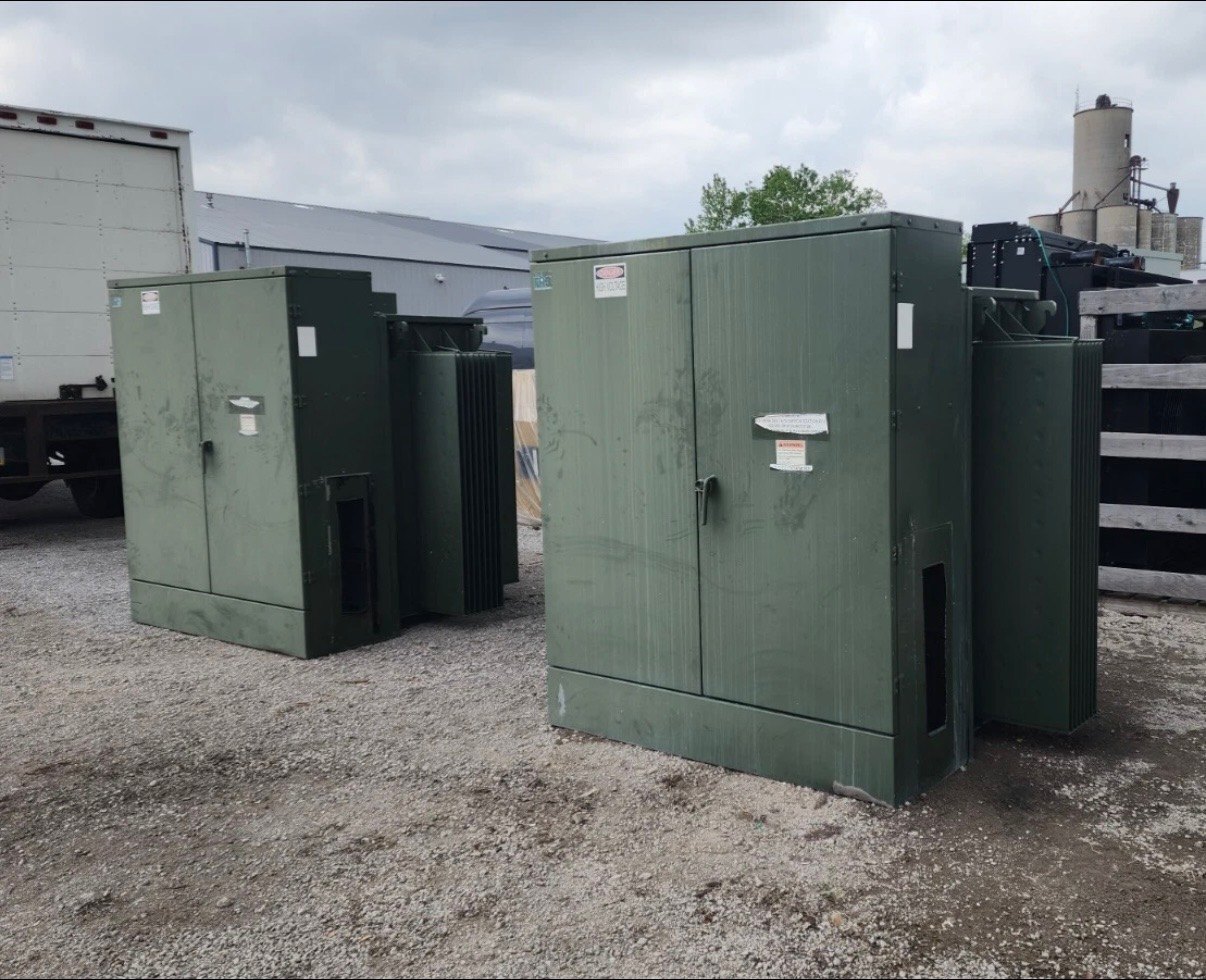
Used & surplus equipment / South Dakota
Sell Surplus Transformers from Manufacturing facilities in South Dakota
Manufacturing plants can have transformers serving production cells, machine tools, welding areas, material handling, utilities or office space.
Text Nameplate Photos ↗A straightforward process
Manufacturing plants can have transformers serving production cells, machine tools, welding areas, material handling, utilities or office space. A line upgrade or facility reconfiguration may leave one unit unused while others remain essential. To evaluate surplus equipment efficiently, connect its identifying details to the plant’s outage plan, load changes and realistic path out of the building.
Build an inventory that reflects machine loads
Avoid treating every transformer on a plant list as interchangeable. Record nameplate voltage and capacity, manufacturer and model, and identify the machine group or area supplied. A unit associated with a retired cell may be available, while a similar-looking transformer may still support a critical process or planned expansion.
Capture the equipment’s condition and configuration without making unsupported assumptions about its internal materials. Include enclosure type, visible damage, accessories and any known service history. Distinguish transformers from other electrical equipment such as switchgear, and keep voltage regulators identified as separate equipment rather than grouping them into the transformer inventory.
- Tie each unit to its former production area or load.
- Photograph nameplates, enclosures and visible accessories.
- Flag equipment retained for backup or future line changes.
Sequence the outage and internal move
A plant outage is often a sequence, not a single date: production stops, affected systems are addressed, access opens, and other work may need to finish before equipment can leave. Coordinate the proposed availability window with operations, maintenance and the staff responsible for the building route. Note narrow aisles, mezzanines, door heights and shared loading areas.
For any plan to have the facility’s transformer disconnected or handled for transport, qualified and authorized electrical personnel must first establish and verify an electrically safe condition using applicable electrical-safety procedures. Clarify who is responsible for electrical work and what the buyer’s freight coverage includes. Freight coverage alone does not establish that disconnection, rigging, loading or internal movement is included.
- Map the route from equipment location to the designated exit.
- List outage dependencies and access restrictions for review.
Present the equipment for a quote
Send the inventory with readable nameplate photos, overall views, quantities and available records. Existing fluid or PCB documentation may matter for relevant equipment; where fluid status is unknown, handle it under applicable rules rather than guessing. Testing is not required to request a quote, although the buyer may need to review the information before deciding whether to purchase.
The buyer covers freight and pays upfront; confirm scope and responsibilities before committing to a transaction. Purchase is not guaranteed, and reuse or salvage may be possibilities rather than outcomes. Contact the buyer at 614-715-3047 or saleselectricalbuyers@gmail.com to discuss the available transformers and plant constraints.
- Share known condition and operating history, if available.
- State which units are available and when access may be possible.
Keep exploring
Related resources.
Find more information for selling electrical equipment in South Dakota.
Start a conversation
Ready to sell your transformer?
Tell us what you have. A nameplate photo and a few equipment details are a great place to start.